Vampires can Lean into trust: Checking proofs for Soundness
Bodingbauer, Jonas
(2026)
Supervisor: Laura Kovács
Master Thesis
Checking the soundness of proofs generated by the Vampire theorem prover with Lean
Scientific Publications
Bodingbauer, Jonas
(2026)
Supervisor: Laura Kovács
Checking the soundness of proofs generated by the Vampire theorem prover with Lean
Jonas Bodingbauer, Márton Hajdu, Laura Kovács, Axel Polaczek, Michael Rawson
ITP (International Conference on Interactive Theorem Proving) (2026)
B.J, D.W, C.W, T.G
In review (2025)
Bodingbauer, Jonas
Master Thesis, Technische Universitat Wien (2025)
Supervisor: Tibor Grasser, Dominc Waldhoer, Christoph Wilhelmer
A first-principles screening study of fluoride-based materials for gate dielectric use in advanced MOS technologies, focusing on dielectric performance and materials suitability.
Bodingbauer, Jonas
Bachelor Thesis, TU Wien / CERN (2022)
Supervisor: Andreas Steininger, Hamza Boukabache, Stefan Tauner
A hardware/software co-simulation verification approach for a safety-critical Zynq-7000 SoC used in CERN radiation monitoring electronics, including UVM-based constrained-random testbench concepts.
Bodingbauer, Jonas
Bachelor Thesis, TU Wien (2022)
Supervisor: Alois Lugstein
Within the framework of this thesis, the Raman scattering behavior of Gallium phosphide (GaP), Silicon (Si) and Germanium (Ge) nanostructures was experimentally examined. A confocal microscope with backscattering setup and a laser used as pumping light source with a wavelength of 532 nm were used to show Stimulated Raman scattering (SRS) on several samples. Furthermore, the temperature dependence of the Raman Stokes scattering intensity and Raman peak red-shifting for GaP, Si and Gallium arsenide (GaAs) has been determined in the temperature range from 20 C to 140 C. The findings in this thesis can be used for further research on nanoscale enhanced stimulated Raman scattering to enable monolithically integrable Raman lasers.
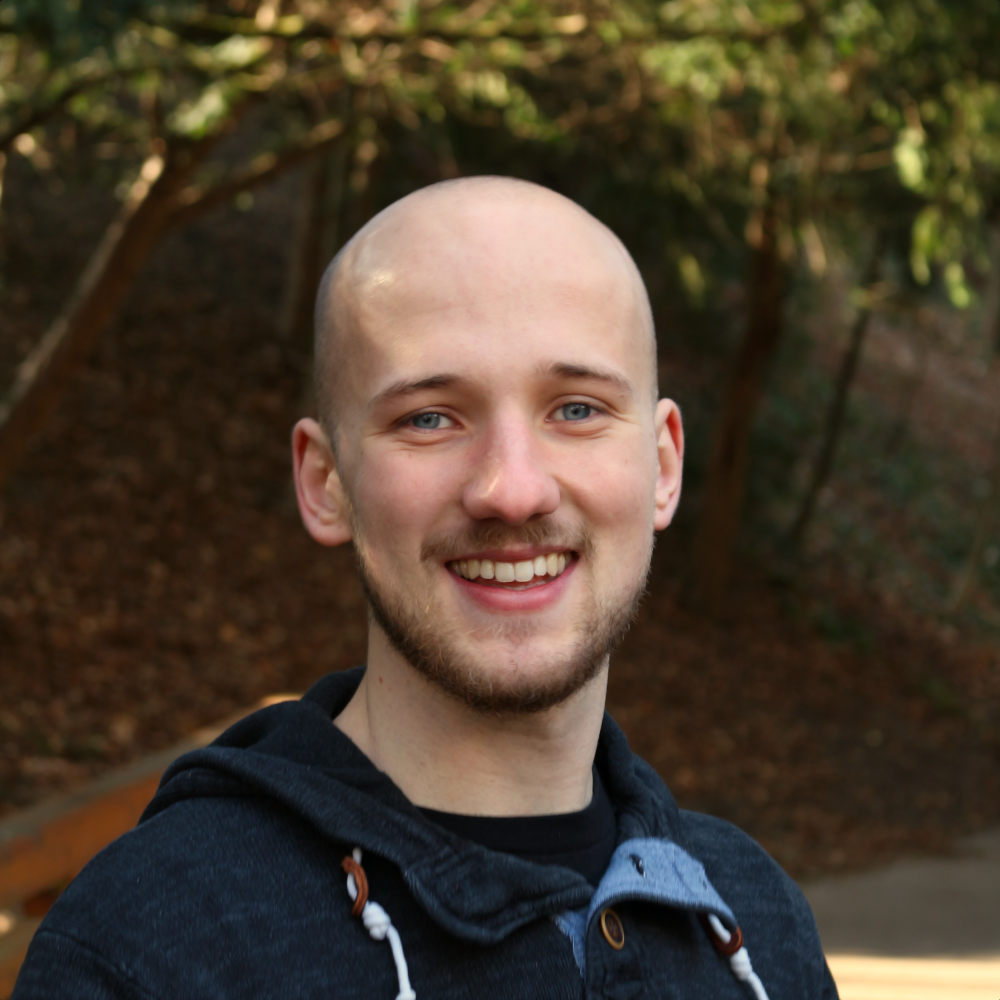
I am a maker and engineer working at the intersection of computation and electronics. I am currently a student in Logic and Computation at TU Wien and have finished my degree in Microelectronics and Photonics. I enjoy building practical systems from first principles - from embedded hardware and circuit-level projects to compilers, simulators, and software tooling.