CHIP-8 JIT
Jonas
TU Wien
2023
CHIP 8 Introduction
- Virtual machine developed in the 70s.
- Describes hardware (input/output) and bytecode instructions.
- Tons of internet resources, differing in some instruction quirks.
- Lots of interpreters, some JITs (none seemed fully working at the time).
Hardware/Memory Specification
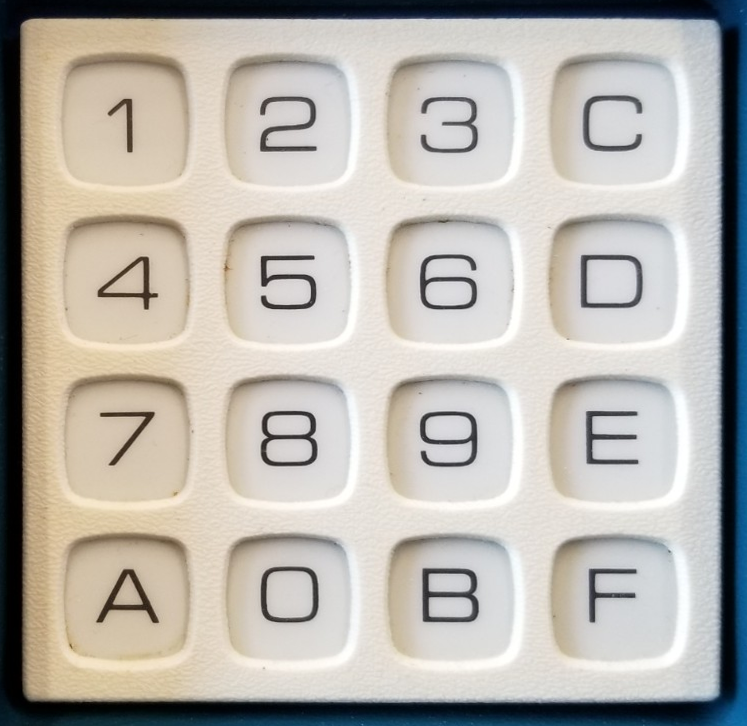
Keypad
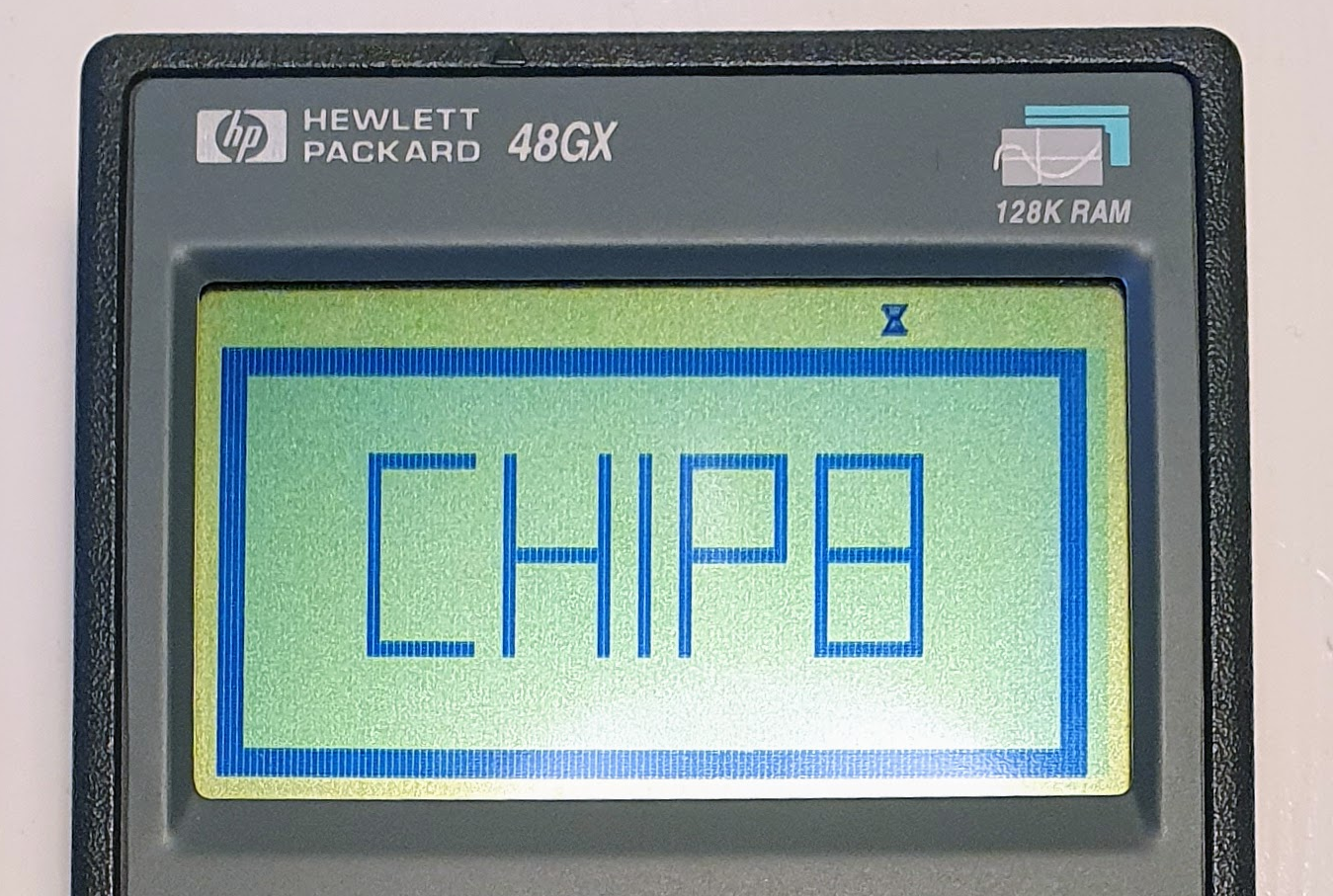
Display (64 x 32)
- 4kB memory (3584 bytes usable).
- About 500 Hz clock speed is sufficient for most games.
- 16 registers.
- 2 timers (sound, delay).
- 32-byte program stack (for function calls).
Instructions
35 instructions
- Arithmetic (8-bit unsigned).
- Program flow (absolute jump, relative jump, conditional, call, return).
- Special instructions (draw, rnd, bcd, load, store).
Load Fx55 - LD I, Vx
Store registers V0 through Vx in memory starting at location I.
Dxyn - DRW Vx, Vy, nibble
Display n-byte sprite starting at memory location I at (Vx, Vy), set VF = collision.
Sprites are XORed onto the existing screen. If this causes any pixels to be erased, VF is set to 1, otherwise to 0.
Components
- Graphical frontend and input (SFML, threaded).
- Parser:
- Find blocks (end at jump/function call).
- Gather used registers in block.
- Compiler (ASMJIT):
- Register allocation.
- Calling conventions.
- Dispatcher:
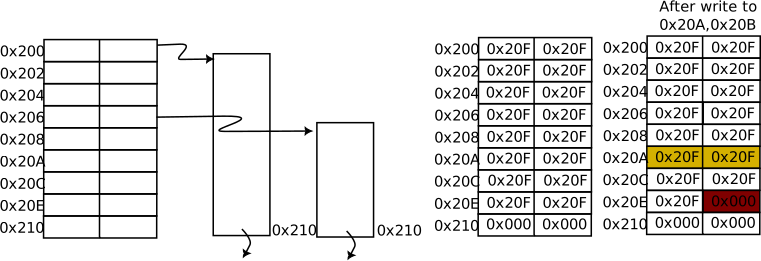
- Handles dirty blocks (writes within current block).
Memory Layout
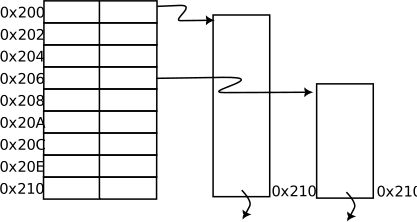
Memory Layout
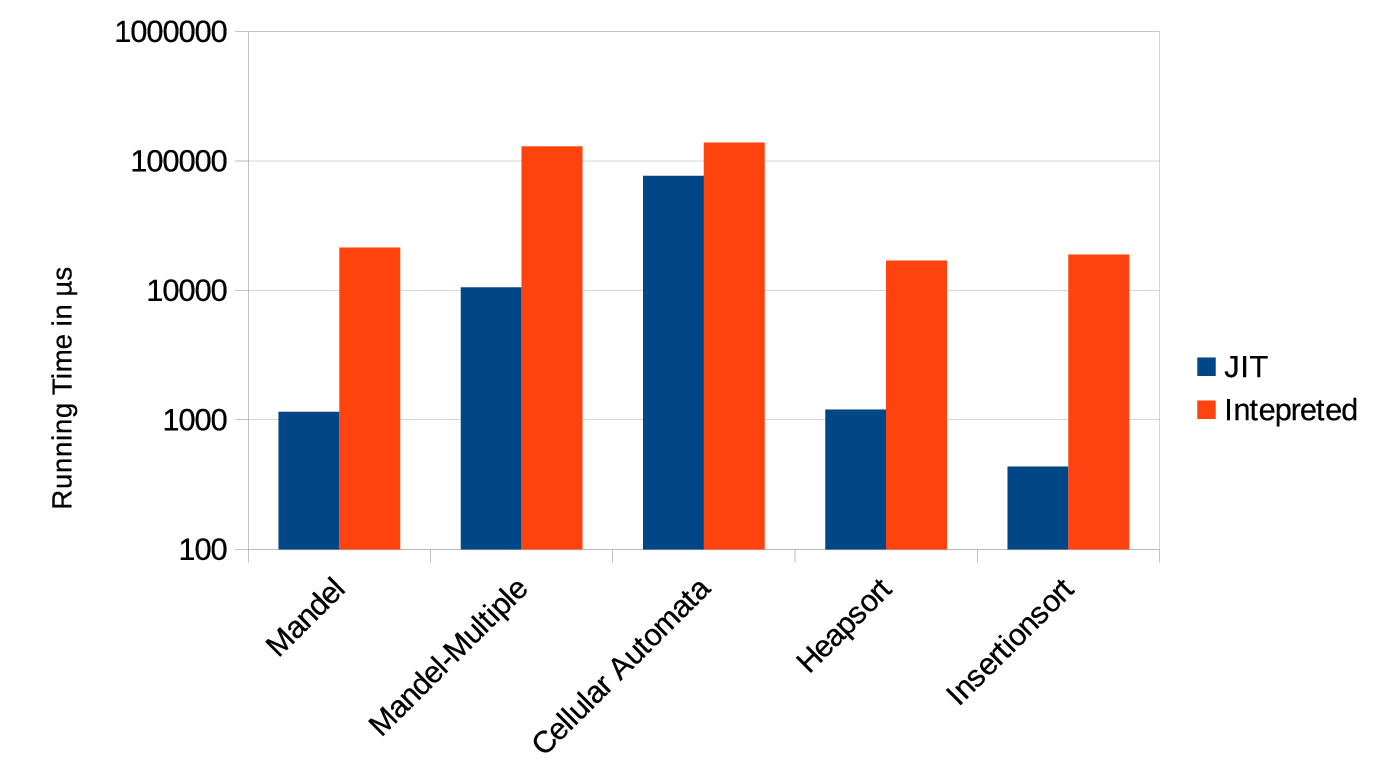
Speed Comparison
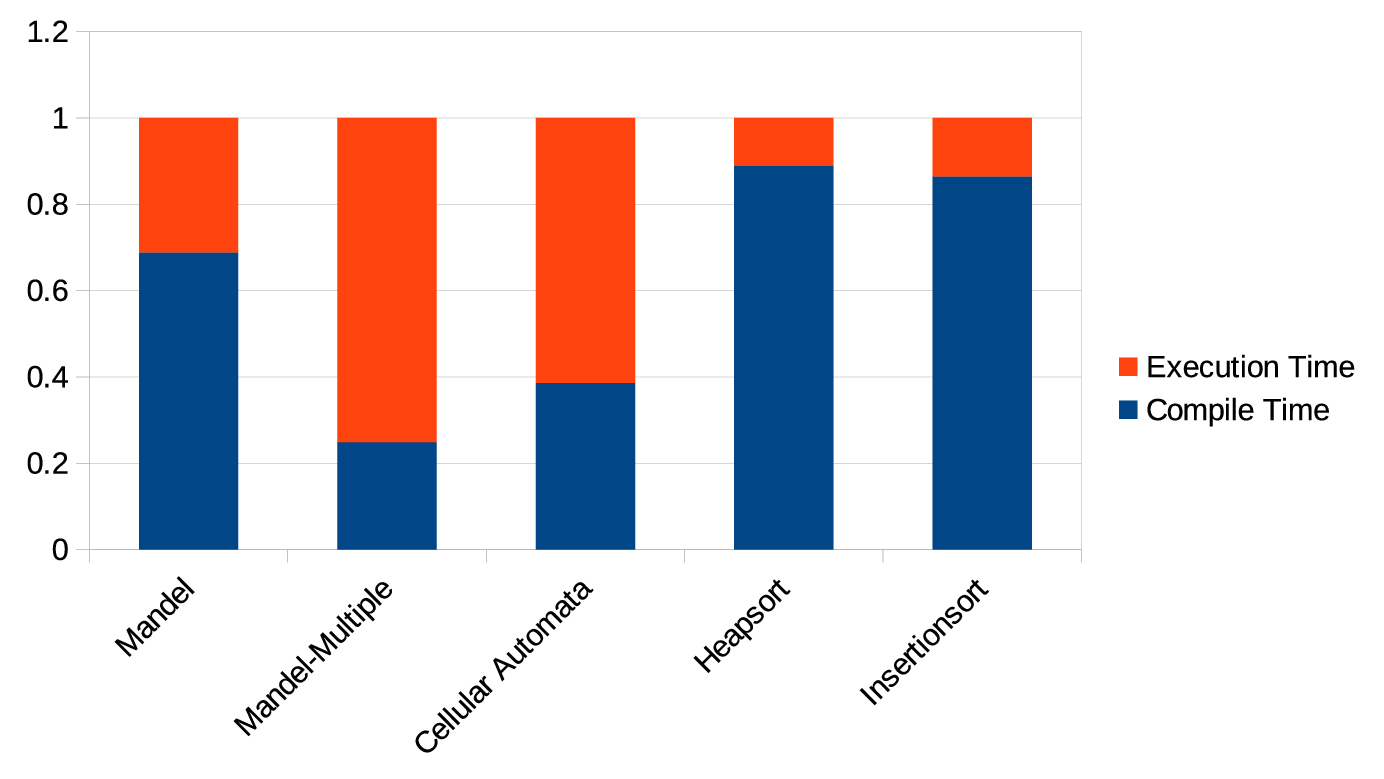
Compile Percentage